

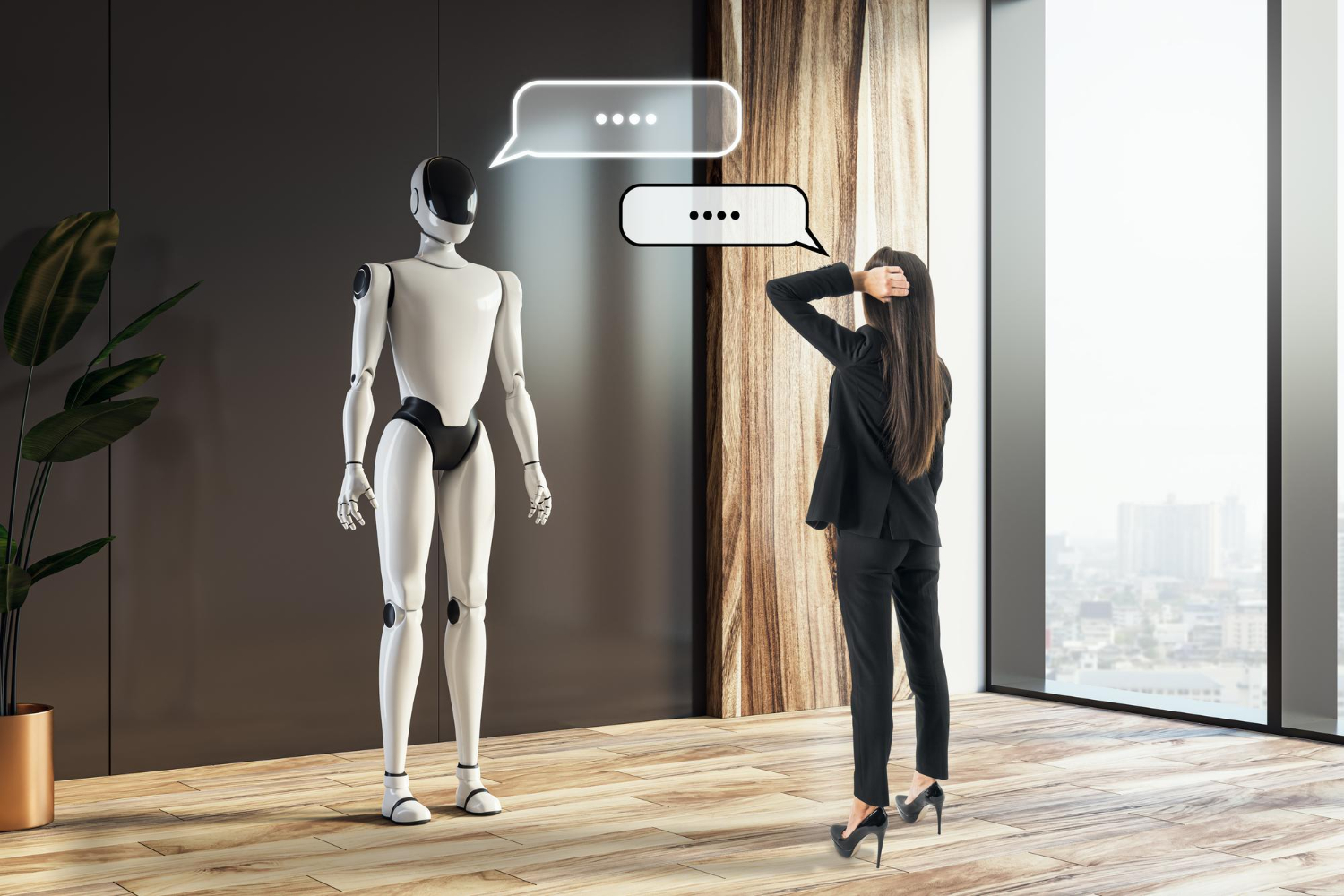
Across the world, employees are already using AI tools.
Quietly.
They write reports faster.
Generate presentations.
Analyze data.
Draft strategies.
Automate repetitive work.
Meanwhile, many leadership teams are still debating whether AI should be allowed.
And this is where the tension begins.
Not publicly.
Not formally.
But inside the daily reality of work.
A silent war is unfolding inside organizations.
Employees are moving faster.
Systems remain slower.
The Invisible Transformation of Work
In many organizations today, the transformation is already happening.
Employees are experimenting with AI to:
• summarize research in seconds
• prepare client proposals
• draft emails and communications
• build dashboards
• generate ideas for strategy
But most of this is happening outside official systems.
Shadow AI is spreading quietly inside companies.
Not because employees want to break rules.
But because they want to do their jobs better and faster.
And AI allows them to do exactly that.
Why Leaders Are Behind
This gap exists for three reasons.
1. Governance moves slower than innovation
Organizations need policies, risk frameworks, and security guidelines before adopting new technologies.
That takes time.
Employees do not wait.
2. Leaders underestimate the speed of AI adoption
Many executives believe AI adoption will take years.
In reality, employees adopt tools in days.
3. Fear of risk blocks experimentation
Privacy concerns, compliance risks, and data security are real issues.
But avoiding AI entirely does not eliminate risk.
It simply pushes AI use underground.
The Real Risk Is Not AI
The real risk is lack of visibility.
When leaders do not acknowledge AI adoption, three things happen:
• Employees use unapproved tools
• Sensitive data may be exposed
• Leadership loses control over how work is actually done
This is not an AI problem.
It is a leadership awareness problem.
The AI Reality Gap
Inside many organizations today there are two parallel worlds.
World 1: Official Work
Policies
Legacy systems
Formal workflows
Approval chains
World 2: Real Work
AI assisted writing
AI research
AI analysis
AI productivity shortcuts
The larger the gap between these two worlds, the more fragile the organization becomes.
The Leader’s AI Alignment Framework
Forward thinking organizations are not trying to stop AI use.
They are aligning it.
Here is a simple framework leaders can follow.
1. Acknowledge the Reality
The first step is accepting that employees are already using AI.
Ignoring this fact only increases hidden risk.
Transparency creates control.
2. Create Safe AI Zones
Define which types of tasks are safe for AI usage:
• brainstorming
• research
• summarization
• productivity support
And which tasks require restrictions.
This reduces fear while maintaining security.
3. Build AI Literacy Across the Organization
Most employees are experimenting without guidance.
Training programs should help employees understand:
• responsible AI use
• data privacy risks
• validation of AI outputs
• bias and hallucinations
AI literacy is now a core professional skill.
4. Design Human + AI Workflows
Instead of banning AI, redesign workflows around collaboration between humans and AI.
Human judgment remains central.
AI becomes a thinking amplifier.
5. Turn AI into an Organizational Capability
The goal is not individual productivity hacks.
The goal is building AI enabled organizations.
Where leadership, systems, and teams evolve together.
The Organizations That Will Win
The winners in the AI era will not be those who adopt AI first.
They will be those who understand how work is changing.
They will recognize the shift early.
They will guide employees instead of controlling them.
And they will redesign organizations around a simple principle:
Human intelligence, amplified by artificial intelligence.
Final Thought
The silent war inside organizations is not between humans and AI.
It is between old models of work and the future of work.
The companies that acknowledge this shift will harness it.
The ones that deny it will eventually lose control over how work actually happens.
And by the time they realize it, their employees will already be working in the future.
Quietly.